For parents & clinicians
What the Research Actually Says About Screen Time
The short answerScreen use is not one single activity. The American Academy of Pediatrics (AAP) advises families and clinicians to consider a child's needs, the content, how media is used, and whether it displaces sleep, play, or other activities. [1]
What this means for your child
Use the key takeaways and questions below to start a conversation with your child’s healthcare provider.
Study details and guidance
The World Health Organization's 2019 guidance for children under five recommends no sedentary screen time for infants under one or for one-year-olds. For children ages two through four, it recommends no more than one hour of sedentary screen time per day, with less being better. [2]
Key takeaways
- Screen use is not one single activity. [1] Not yet rated
- An association does not establish that screen use caused a particular outcome. [1] Not yet rated
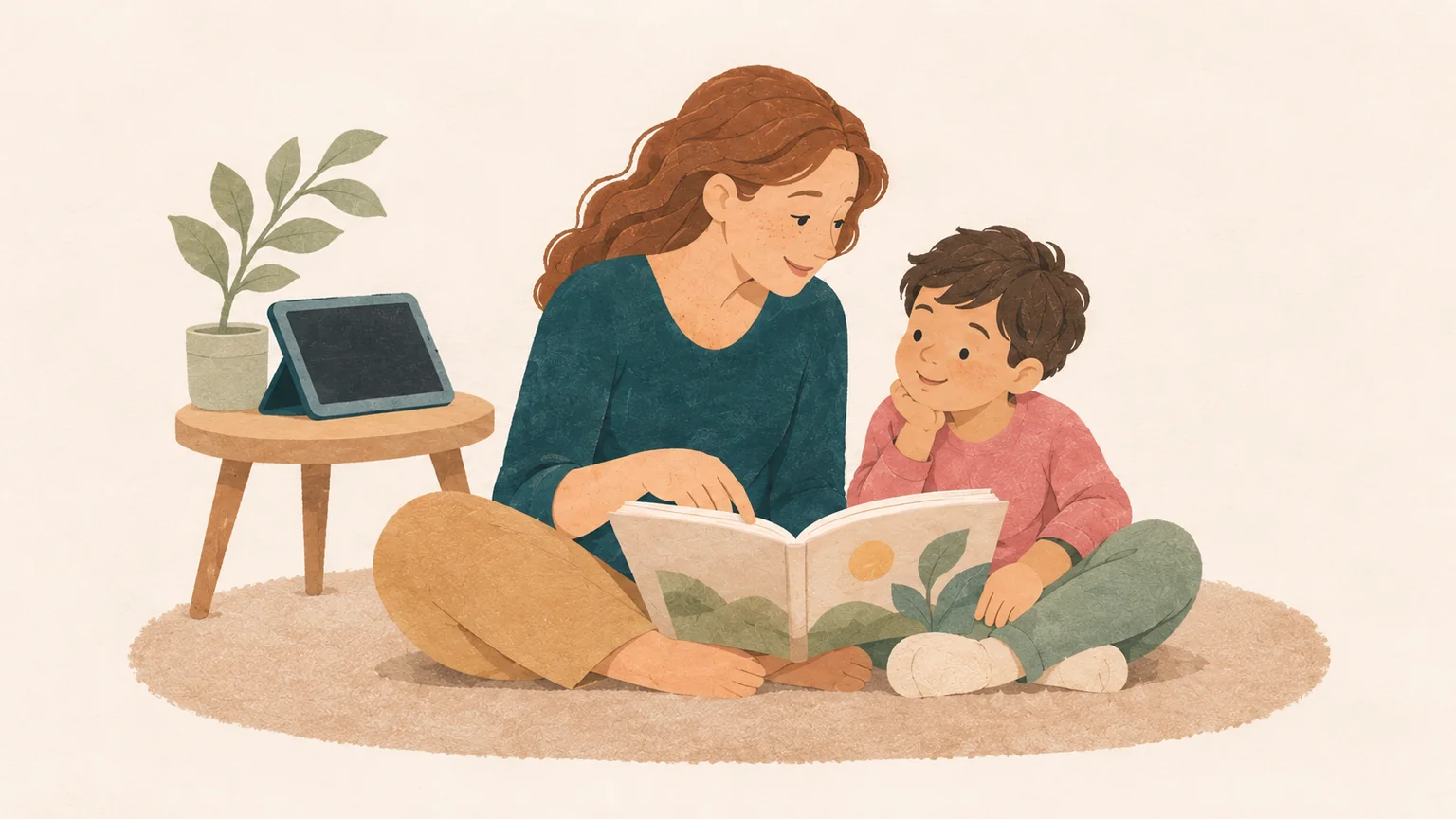
- The AAP suggests choosing child-centered content, creating screen-free times, watching or playing alongside children when possible, and avoiding screens for an hour before bedtime. [1] Not yet rated
What does current guidance say?
In its 2026 policy statement, the AAP emphasizes high-quality content, family routines, and limits tailored to the child. It describes media use as shaped by a child's characteristics, family, and the design of digital products, rather than screen duration alone. [1]
The World Health Organization's 2019 guidance for children under five recommends no sedentary screen time for infants under one or for one-year-olds. For children ages two through four, it recommends no more than one hour of sedentary screen time per day, with less being better. [2]
These are population-level guidelines, not a diagnosis or a measure of a particular child's development. The AAP notes that families' needs and routines differ and recommends discussing practical boundaries with a healthcare provider. [1]
What does the evidence show?
The AAP's policy statement reports that high-quality educational media is associated with learning and prosocial outcomes in some studies, and that shared viewing with a caregiver can strengthen benefits. It also reports associations between heavier noneducational or solitary media use and less favorable developmental or sleep outcomes. [1]
An association does not establish that screen use caused a particular outcome. The AAP identifies several influences on children's media experiences, including family circumstances and the design of media products. [1]
What can families discuss with a provider?
The AAP suggests choosing child-centered content, creating screen-free times, watching or playing alongside children when possible, and avoiding screens for an hour before bedtime. It also recommends keeping devices out of bedrooms to support sleep. [1]
Sources
- Munzer T, et al. Digital ecosystems, children, and adolescents: policy statement. Pediatrics. 2026.
- World Health Organization. Guidelines on physical activity, sedentary behaviour and sleep for children under 5 years of age. 2019.